Or to put it more accurately, in many ways we don't really know them at all.
I have alluded before to something that many theologians have known for a long time, something I didn't come up with on my own, that in many ways
Jesus was a radical. That isn't to say he was a raving ideologue, or some kind of Jewish anarchist. From the depictions we have of him he favored quiet, peace and rest as well as good times with friends and family. He also appears to have been very observant, going to the temple, singing the Psalms, and reading from the Torah. Yet he saw past clinging blindly to the letter of the law and ignoring its spirit, in which he revealed its source and intent: love for God and for neighbor. No interpretation of religious law that defied this mandate could be genuine and no secular law that ignored it could be just.
Then there were the early churches. I've heard they initially shunned the iconography of the cross. It isn't surprising. The cross in that era was a sign of shame, terror and agony. It was the visible symbol of what happened to those who defied Rome and its Emperor. To look at a cross was to look at the power of the largest known empire in the world and its dominion over your life. To have taken up the cross as their own symbol, the members of the church would have been doing what so much of the Gospels did, inverting familiar signs of power and meaning. It was an act of defiance. What you proclaim as death we proclaim as life. What you intended to cause despair has become a source of hope. But how can that symbol carry the same impact today?

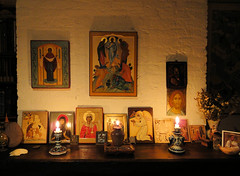 Image by jimforest via FlickrHave you ever visited a shrine or a temple or cathedral, maybe a synagogue or a mosque, and felt a vital energy and a connection to something ancient and mysterious?

